Sociobiodiversity Web: Structural Investments at the Foundation of Brazil’s Sociobioeconomy

Who produces
and conserves
Brazil’s biomes?

In the territories, income generation and environmental preservation go hand in hand.

The community socio-bioeconomy of the 405 initiatives supported by the Sociobiodiversity Web shows this in practice, from the North to the South of Brazil. Explore this portrait of the economies of traditional peoples and communities.

Download now

Download for free and explore the economies of the territories.

Your data is processed in accordance with the Casa Fund’s Privacy Policy and used solely for the purposes indicated above.

Sociobiodiversity Web:Structural Investments
at the Foundation of
Brazil’s Sociobioeconomy

What economies keep the biomes alive, and who makes them happen?

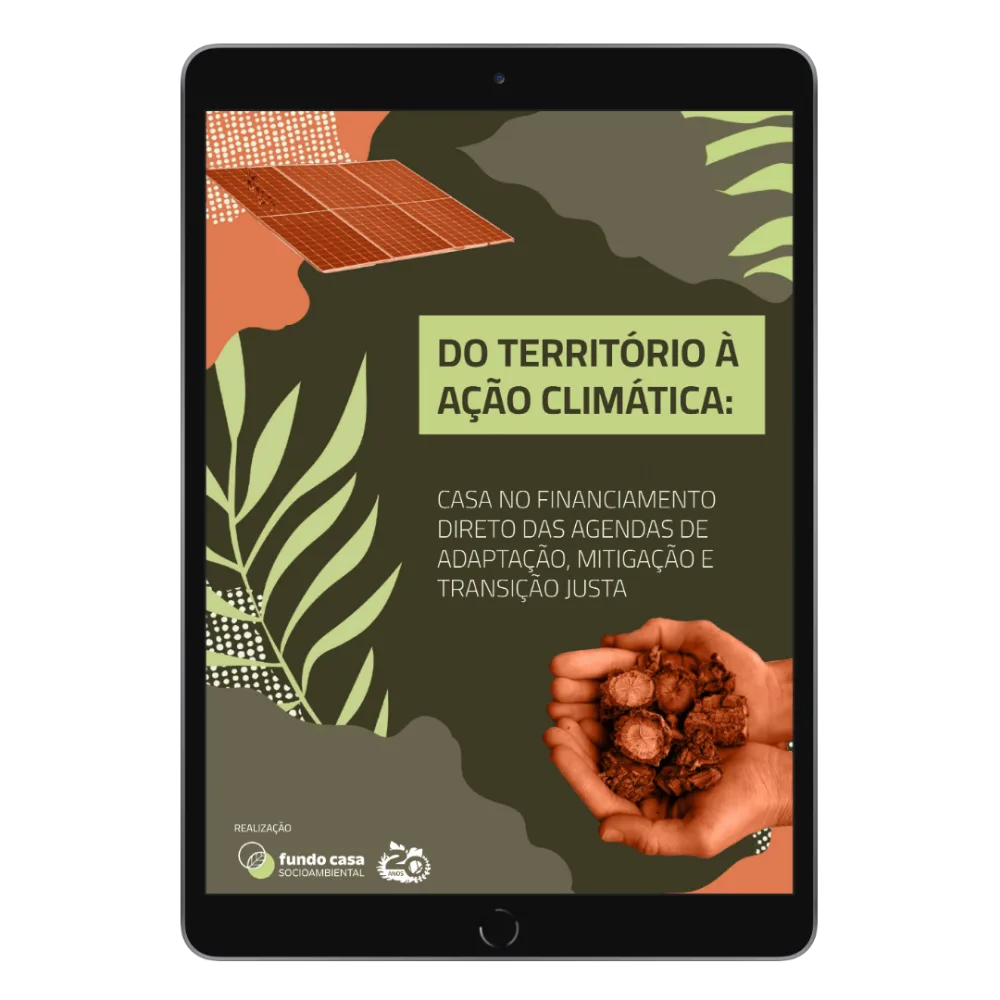
Using data, the publication presents a portrait of the community socio-bioeconomy based on the projects supported across Brazil by the Sociobiodiversity Web, an initiative of the Casa Socio-Environmental Fund in partnership with Fundo Socioambiental CAIXA.

The study brings together the profile of the supported organizations, the distribution of resources, the challenges identified by the territories themselves, and the pathways they propose to overcome them. It also features five case studies that show, in practice, how the businesses of the socio-bioeconomy and Nature-based Solutions work.

Download the free digital version, with analyses for funders, public managers, community organizations, and anyone interested in the topic.
Download now

The Sociobiodiversity
Web in numbers:

  • R$40million

    (approx. US$7.8 million) in direct grants to community initiatives, through two public calls for proposals held between 2024 and 2025.

  • 405supported
    projects

    out of 3,860 proposals received, in 316 municipalities and in every state in Brazil, across the 6 biomes and transition zones.

  • 55.1%  of the
    organizations

    are led by women, and 81.7% have leadership by people of color.

  • 9in 10 supported
    projects

    come from organizations that are part of the territories where they work. Support reaches those who conserve and produce in their own territories.

Learn more

Source: publication Sociobiodiversity Web: Structural Investments at the Foundation of Brazil’s Sociobioeconomy (Casa Socio-Environmental Fund, 2026).

If we want a new economy capable of conserving biodiversity, addressing the climate crisis, producing food, generating income, and keeping value in the territories, we need to fund those who already do this work every day.

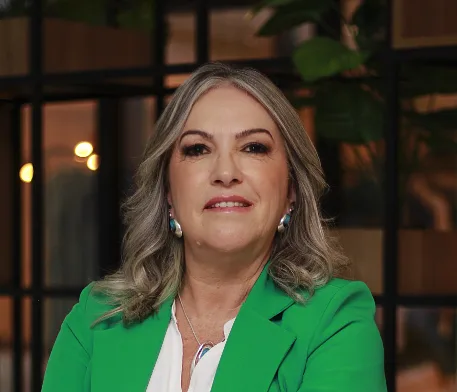
Portrait of Cristina Orphêo
Cristina OrphêoExecutive Director of the Casa Socio-Environmental Fund

What
you’ll find

With this publication, you will:

  • Explore a portrait of the community socio-bioeconomy based on the Sociobiodiversity Web’s portfolio: who leads, where they work, and how production and conservation go hand in hand in practice.

  • Understand the Sociobiodiversity Web’s two lines of support, Sociobiodiversity Businesses and Nature-based Solutions: 80.2% of the projects used the grants to structure businesses, from production to commercialization.

  • Learn about the profile of the supported organizations, including 84 projects by Quilombola and Afro-descendant communities and 63 by Indigenous Peoples.

  • Get to know the challenges identified by the organizations in the territories and the pathways they themselves propose to overcome them.

  • Access case studies that show, in practice, how direct funding unlocks entire economic processes in the territories.

Full table of contents:

The publication is organized into chapters that cover Brazil’s community socio-bioeconomy from end to end: the context and concepts that underpin the portrait; the Sociobiodiversity Web’s journey through the two public calls for proposals; the profile of the supported organizations and the distribution of resources across the territories; the data on access to institutional markets, such as the PNAE (National School Feeding Program) and the PAA (Food Acquisition Program), programs that already reach 63.2% of the projects; the challenges and pathways identified by the territories themselves; and the case studies of the supported businesses.

  1. 01Introduction
  2. 02Context of the Socio-bioeconomy in Brazil
  3. 03Methodology
  4. 04Sociobiodiversity Web: A Portrait of the Community Socio-bioeconomy in Brazil
  5. 4.1Scale
  6. 4.2Demand and Territorial Reach
  7. 4.3Community Organizations and Territorial Rootedness
  8. 4.4Economies Strengthened by the Sociobiodiversity Web
  9. 4.5How Direct Funding Seeks to Structure Economies Already Underway
  10. 4.6Five Case Studies
  11. 05Key Messages the Sociobiodiversity Web Reveals About the Community Socio-bioeconomy
  12. 06Implications for Funding the Community Socio-bioeconomy
Download now

Stories that bring the portrait to life

Across the 405 projects supported by the Sociobiodiversity Web, each business has a name, a territory, and a story of its own. These five cases, presented in detail in the publication, show how direct funding unlocks economic processes that already existed but needed concrete conditions to grow.

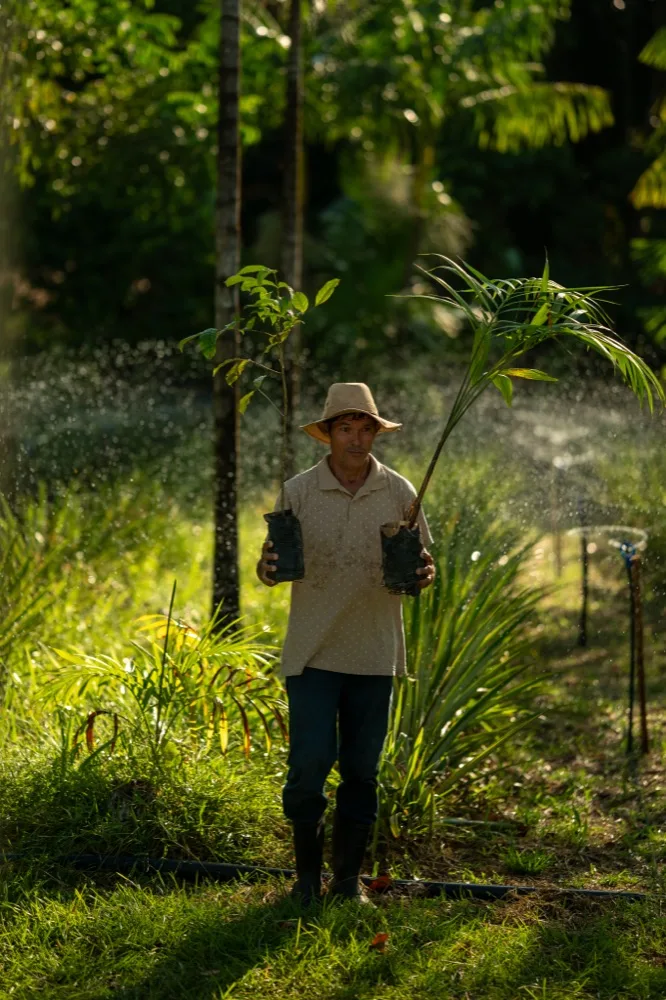
Farmer holding palm seedlings in an agroforestry area in Salvaterra (PA)
Amazon

Agroforestry that
becomes food

Salvaterra (PA)
The Cooperativa dos Agricultores e Agricultoras Familiares de Salvaterra (CAFAS) develops agroforestry production in the territory, combining cultivation, conservation, and income in the Amazon.

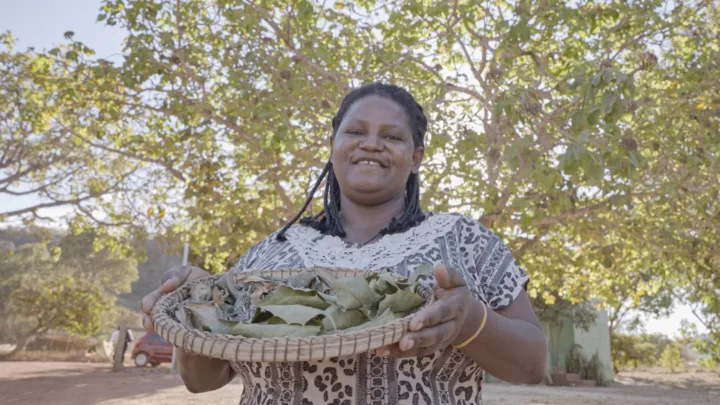
Smiling woman holding a basket of Cerrado leaves in Cavalcante (GO)
Cerrado

The agro-industry that
is up and running again

Cavalcante (GO)

The Associação Kalunga Comunitária do Engenho II (AKCE) produces and adds value to Cerrado products, strengthening the territory’s economy and families’ ability to remain on their land with dignity.

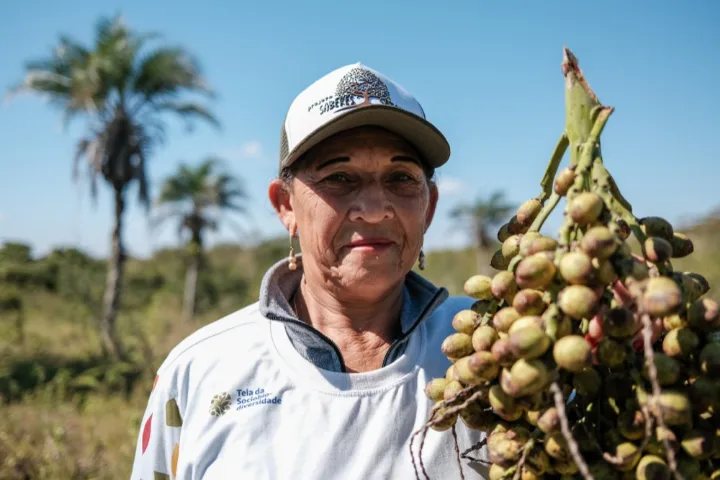
Woman in a cap holding a cluster of Caatinga fruits in Ibimirim (PE)
Caatinga

Old knowledge, new kitchen

Ibimirim (PE)

The Associação de Mulheres Indígenas da Aldeia Nazário (CABOAMAN) turns Caatinga fruits into a source of income, valuing the knowledge of the territory itself.

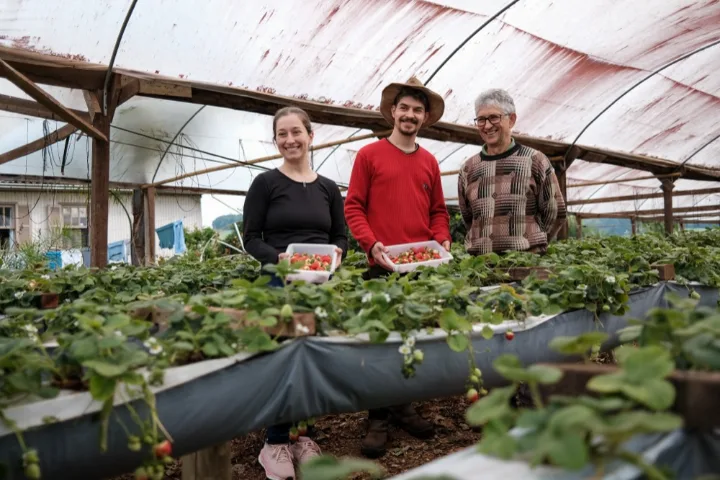
Three people holding trays of strawberries in a greenhouse in Tapejara (RS)
Atlantic Forest

Young people who stay
in the countryside

Tapejara (RS)

The youth of the Associação dos Agricultores do Condomínio Rural São Domingos organized an agroecology fair, opening space for the next generation of the community socio-bioeconomy.

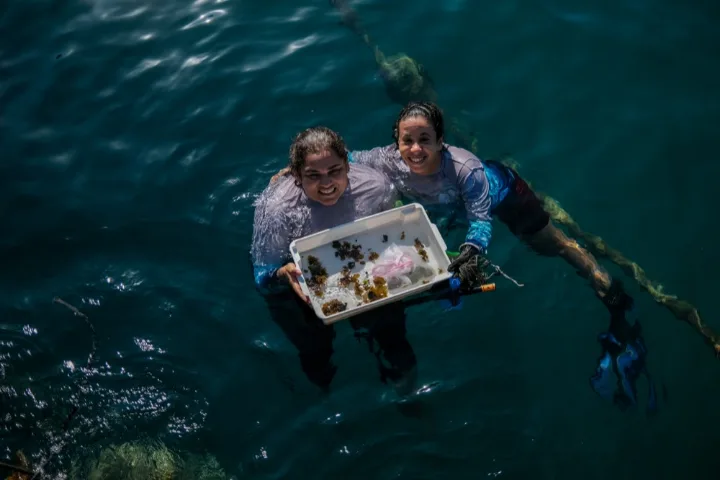
Two women in the water holding a tray of seaweed at the Arraial do Cabo Marine Extractive Reserve (RJ)
Coastal and Marine Zone

Seaweed that becomes dye

Reserva Extrativista Marinha de Arraial do Cabo (RJ)

The organization Lagos em Ação, in partnership with Devolverde and Alma Colorida, strengthens the mariculture chain in the ocean economy.

Each case illustrates a chapter of the study. Download the publication and explore all five in detail.

Download now

Connecting local solutions
to global decisions

The Casa Socio-Environmental Fund has worked for more than 20 years to ensure that resources reach those on the front lines of socio-environmental protection. It is part of Rede Comuá, which brings together independent funds from Brazil, and of Global South networks such as the Alianza Socioambiental de Fondos del Sur.

Casa Socio-Environmental Fund. Investing in those who build paths to sustain life.